A Film By Fancy Pigeon Media
This film was independently funded and created for the community. If you feel so inclined, a donation link can be found here and all funds will be directed to the costs of making the film.
John Mathews
I don’t have much of a background as a bikepacker. I come from the world of one day gravel racing where I experience it both as a participant and as a video creator. Doom was never on my radar as a participant. Too scary. Despair (the 200 mile option), however, I saw as an opportunity to dip my toes into the discipline. As the 2025 edition grew closer and I couldn't get rid of a knee ailment, I knew riding 200 miles in the Ozarks would have been an unwise decision.
Even so, I wanted to be involved in the event. I called up Andrew and asked if there would be interest for some type of video production. It was a yes. My professional background is in documentary storytelling, so naturally this was the approach that I wanted to take - thinking maybe I could make a cool 20 minute vignette of the event. I reached out to my partner and good friend Danny Luksa and asked if he would be down to spend five days shooting a bike race in rugged, cold, and wet conditions. Another yes. On top of it all, the historic rain and flooding forecasts were only getting worse by the hour. So with a few loose plans and a lot of uncertainty, we set off for what was to become the biggest project of my career.
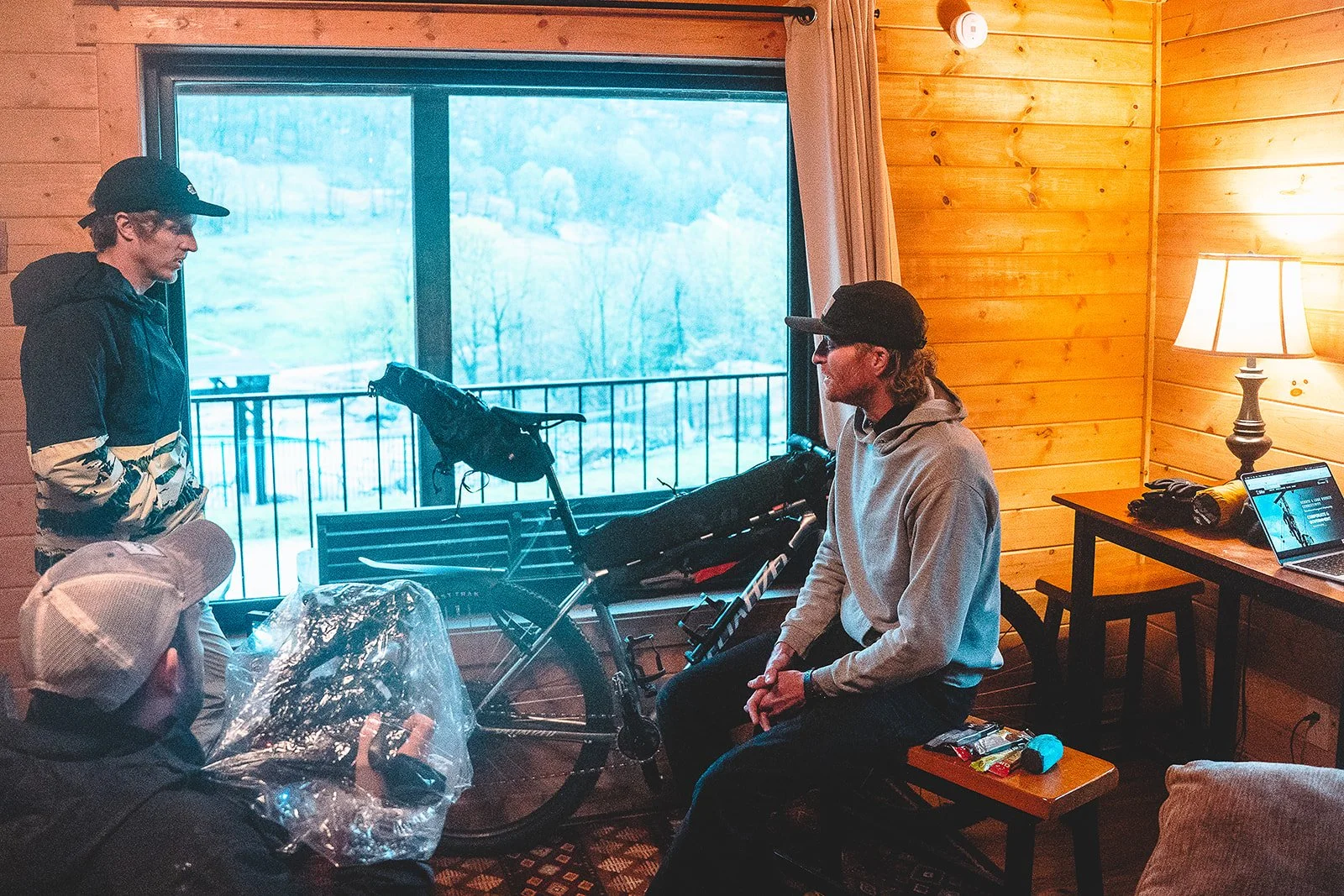
Documentary storytelling can take many different forms, and heading into shooting we weren’t one hundred percent sure what this one would look like. The original idea was to let the race be the main character and use some athlete perspectives to bring it to life. With Andrew’s help we reached out to a few participants for interviews. The day before the race we shot 7 interviews, 3 “off-the-bike” features, scenics, and the pre-race meeting. This was all the material that would be crucial to putting a voice to the story. Race morning came and this is when the project's form came into focus.
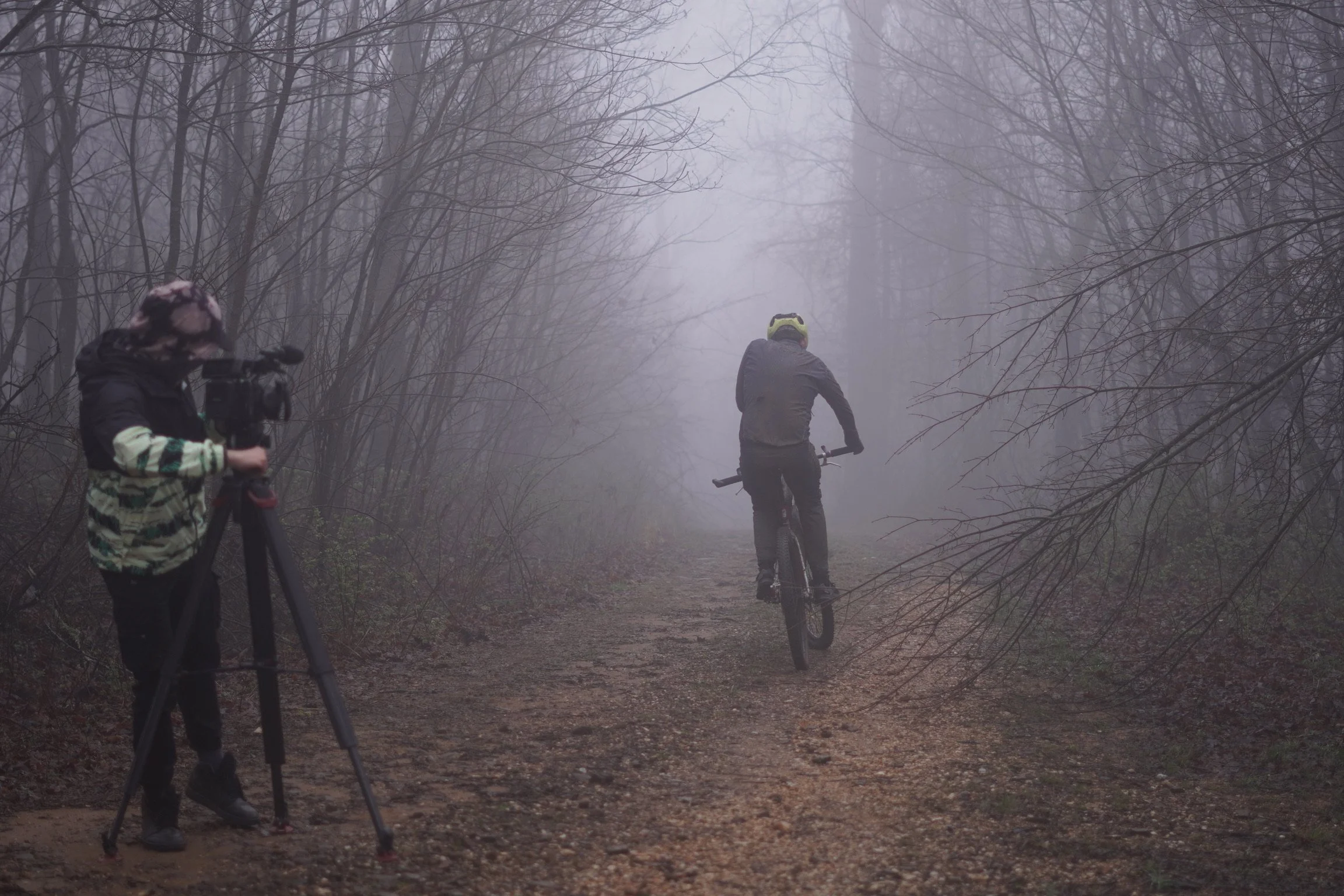
Some documentaries rely on hours of interviews to drive the narrative, or historical footage to tell a story of the past. For this project we simply shot what happened with an emphasis on not affecting the racer experience. We wanted to honor the ethos of bikepacking and have as little of an impact on the event as possible. As awkward as it felt in the moment, we made a conscious decision to not speak to any of the racers during the event. This informed a lot of the style of the documentary. In its truest sense we simply captured what was unfolding.
What became was the story of 6 racers accomplishing the 2025 edition of Doom. I could have never foreseen how special this project would become and how impactful each of the sixes stories became. Most importantly, Andrew’s heart and dedication made for a poignant telling of a rare thing: grassroots community. This wouldn’t have been made possible without the buy-in from Andrew and all of the athletes who participated. I can’t thank them enough.
Danny Luska
When I think back on Doom, nearly a year into the rearview mirror now, the strongest memory I have is this feeling of how incredible the bikepacking community is. Going into the event, I was a foreigner: I couldn’t relate to the physical strain of multiple 12+ hour days in the saddle, the solitude or loneliness that comes when you’re out there, or the desire to try something as massive as this. I’m a pretty casual mountain biker. Going into Doom, I hadn’t shot a bike race before.
The environment was intimidating and at first glance I saw a group of heavy-metal lunatics who were going to do this unfathomably long ride in horrible conditions. But Andrew welcomed me with open arms. So did our six characters, and all of the other riders. Most importantly, they welcomed the cameras, and made conscious decisions to allow vulnerable moments to play out on camera.
There was palpable intensity in the air during the hours leading up to Doom, in a much different way than a one-day cycling event. When you stand at the start line at Unbound, Leadville or any other one-day event, the rider versus rider competitive energy is thick. At Doom, it’s rider versus self. You could almost read people’s minds. Am I going to be too cold? Am I going to be too wet? Will I be able to dig deep enough when the millionth 1,500ft climb starts and I haven’t slept in 36 hours? That tension lends itself to a documentary very easily.
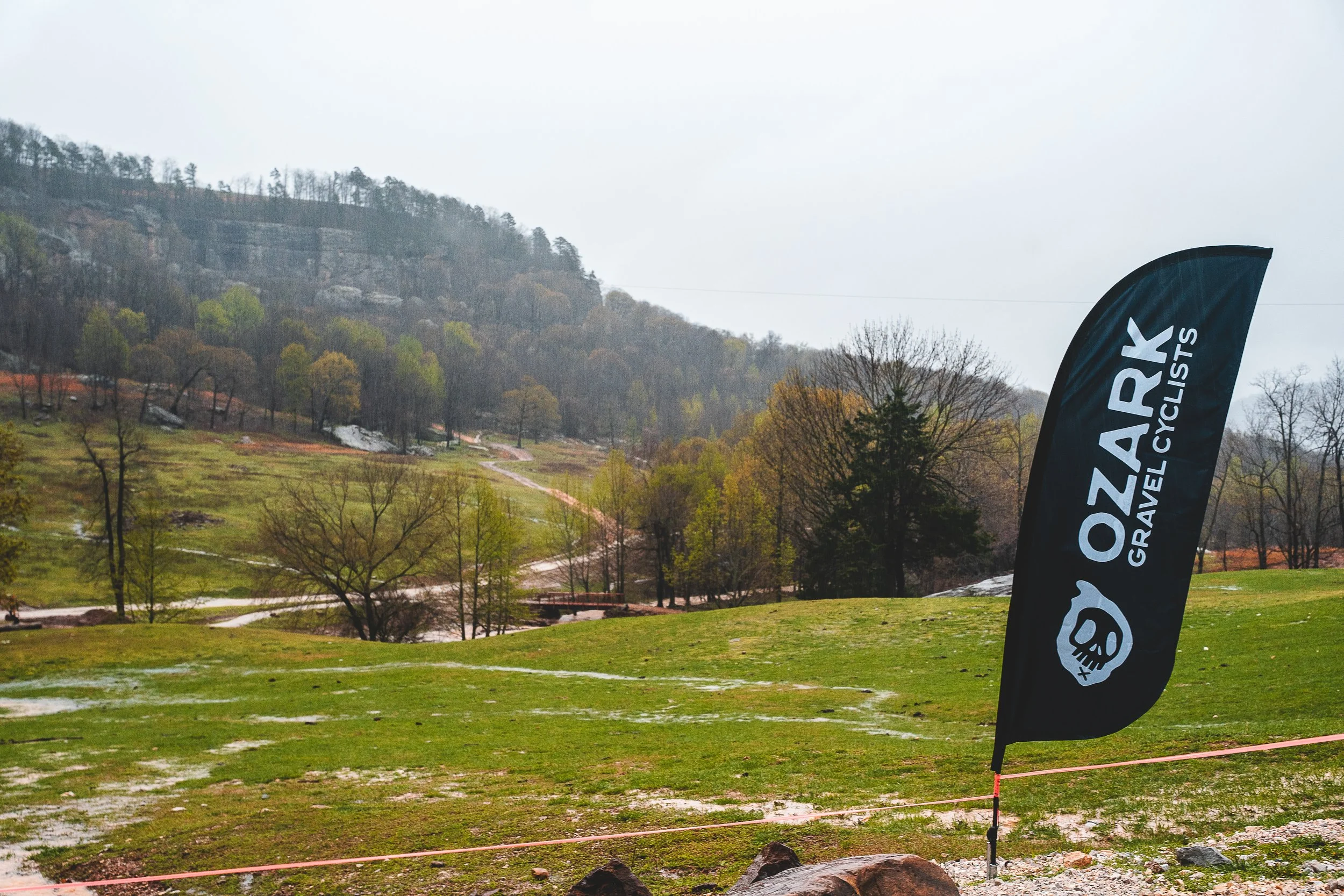
It didn’t take long to get a sense for how everybody was feeling. To make sure that same feeling would translate on screen, we needed to start shooting immediately. There was so much to shoot… livestock, waterfalls, rivers overflowing with flood water, the returning winner setting up his campsite under a mostly-wet pavilion.
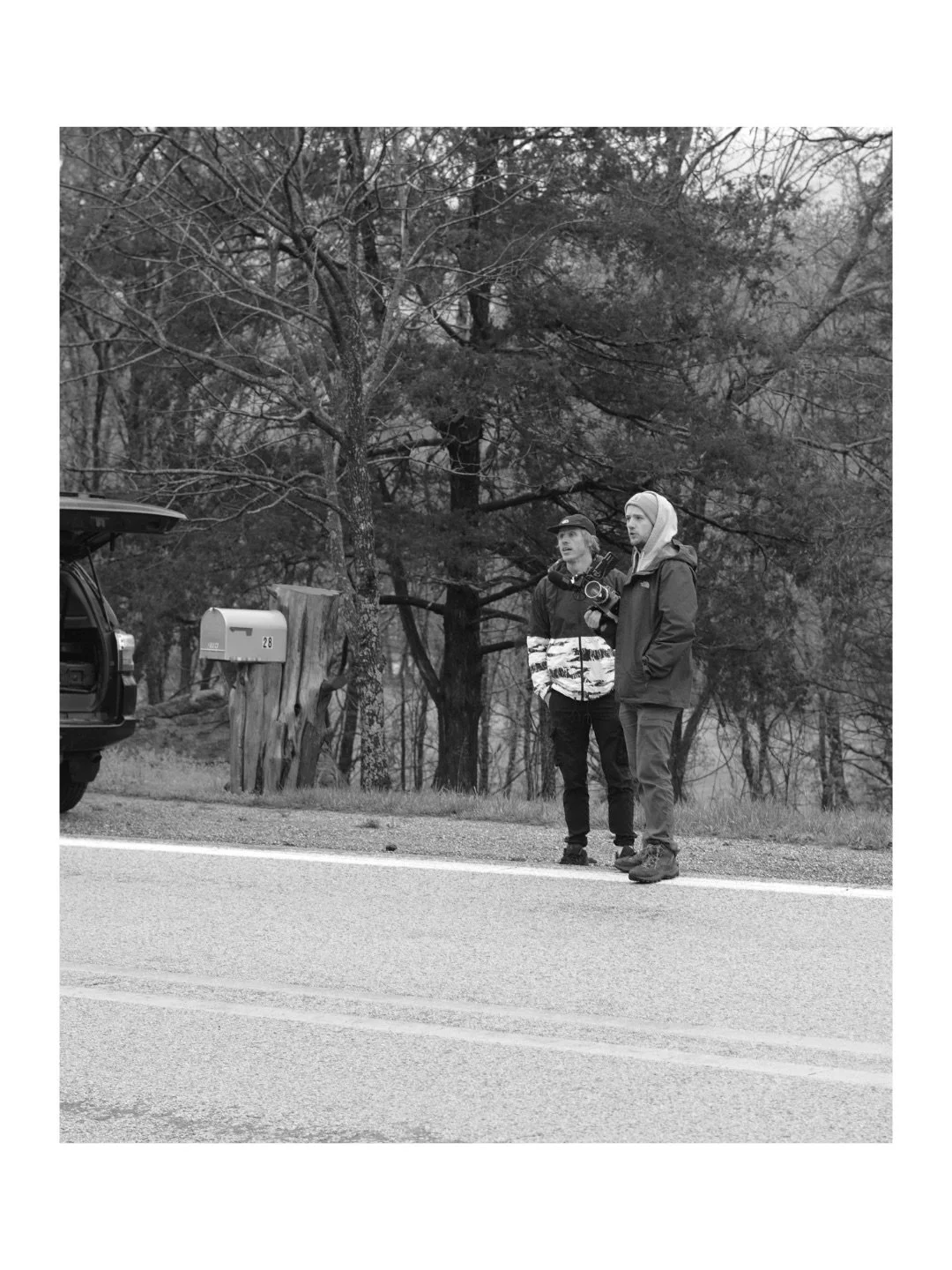
95% of the footage in the doc comes from two Sony FX6s with Blazar Remus anamorphic lenses. The FX6 might be the best verite documentary camera ever made. It's light, offers efficient codecs, has minimal power draw, and creates an excellent image. Shooting Doom meant successive 16+ hour days with no opportunity to charge camera batteries. With some cut up trash bags to act as impromptu rain gear, the FX6 was the shining star of our operation and the images we captured at Doom are still some of my favorites ever.
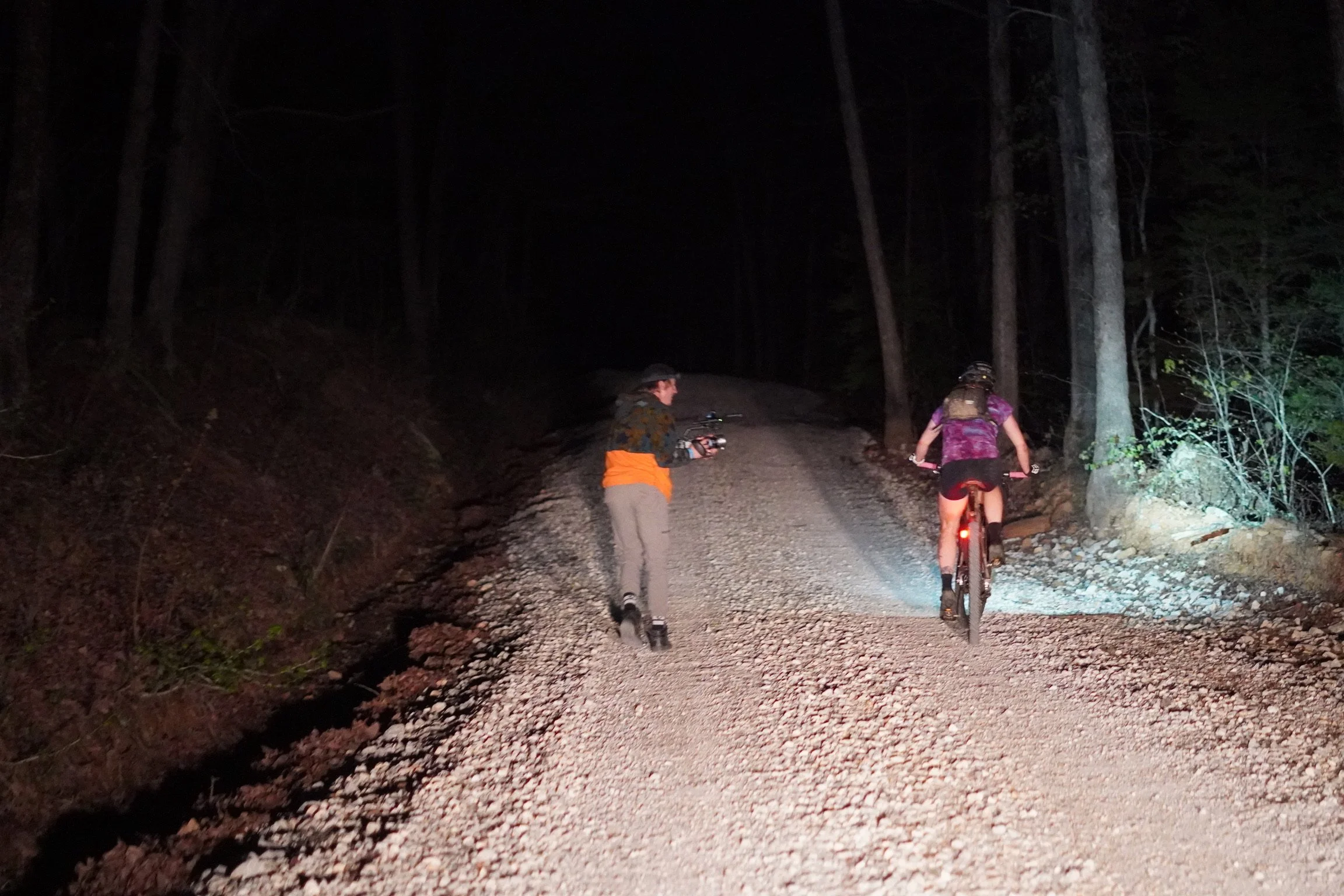
Our biggest challenge was the scale of the route. As the race progressed, the distances between our characters increased and so did the weight of our decisions about where to go & who to film. We spent two big days out on course. I drove, John navigated. Weaving through some of rural Arkansas’ finest small towns, we covered more than 500 miles to capture the race.
We jumped my car at least twice, saw beautiful sunrises and sunsets, and dodged herds of deer in the dead of night. We took a wrong turn at one point, and sent ourselves down a loooooooong forest service road that dead-ended at a furious stream crossing (that was frustrating). Most of all, we captured some amazing moments that epitomize the spirit of this cycling discipline.
I have a million memories from the few days we spent shooting Doom. I’m hopeful that the documentary leaves viewers with the same feeling I had after we wrapped: this is an amazing community, and the journey they set out on is as masochistic as it is inspiring. I’m also hopeful that we did them proud, because they welcomed us with open arms on this journey of a lifetime.